
How to Get a Luxury Car Without the Price Tag
I’m not a car person. I still drive a 2003 VW Passat.
No kidding.
And you know what? That 12, almost 13 year old car, is still in pretty darn good shape!
Of course, I don’t drive a lot either, since I work from home.
And I’m also not judgmental of others who do like cars or need to get a new one.
In fact, I’ve helped clients negotiate the price of a new car in the past…
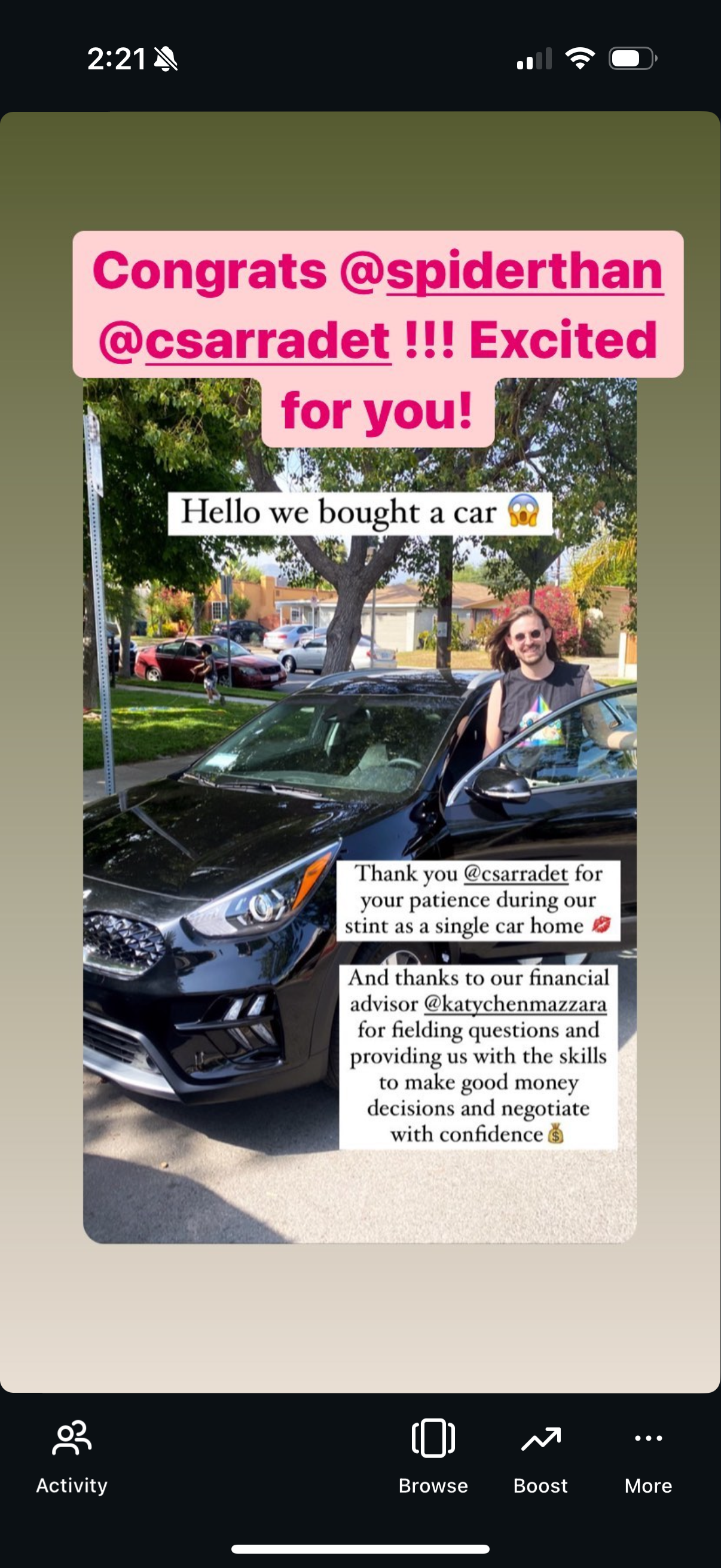
Most financial folks advocate to buy a car outright with your savings. While that sounds logical (since you don’t have to pay any interest), unless you’ve got tens of thousands or even a hundred thousand dollars, pounds or Euros saved up, most people don’t have the funds to buy a car outright.
And even if you do have that much in savings, sometimes you may not want to.
When my husband and I decided to replace his old Jeep Cherokee with a new Jeep Grand Cherokee in 2014, we decided to not to use our savings because they were offering 0% interest! So, we did a 3 year loan at 0%, and kept our savings account earning 3-4% interest!
So, sometimes while financing or leasing which could be more affordable and viable, it may also be the more financially smart option.
So, if you either need to buy a new car or would like to get a dream car, this collaborative/contributed post is for you.
Loan or lease…pros & cons and which is cheaper?
I usually advocate for a loan over a lease. While your monthly payments may be lower on a lease, financing your car means that at the end of your payment period, you will own the car…and NEVER have a car payment again!
I mean for the last 17 years, I haven’t had a car payment on my VW Passat, and for the last 8 years, we haven’t had a payment on the Jeep Grand Cherokee.
It’s sooo nice not to have a car payment at all, and to outright own the car. If we want to sell, trade, or give it to a charitable organization, all of the money or deduction goes to us.
With leasing, you’re essentially renting the car for an agreed period of time, and in general, you’ll have cheaper monthly payments than a loan. You’ll also have maintenance covered, since a lease is generally for a shorter amount of time (see below on car repairs).
Another bonus to leasing, at least for some people? At the end of your agreed lease you can either renew the lease, start a loan then and have a lower monthly payment because the residual value has gone down, or if you just love having a new car every few years, it’s a great way for you to get a newer and better model (again, no judgment…my father-in-law is in his 80s, and he loves having a new car every few years and not worry about maintenance)!
Another reason to finance? If you use your car predominately for work (like we’re talking 99-100% of the time), then it makes sense for your business to lease a car, then for you to buy one. You’ll get a new car, lower payments AND it’s all tax-deductible to the business.
A few things to consider if you're leasing and would like to buy this car after the lease period ends… please negotiate the residual value of the car (how much is left over after the lease ends), so that you’re not stuck paying almost sticker price for that car later. It’s much easier to negotiate all of that in the beginning, instead of negotiating it after your lease ends. When your lease ends, the dealership really doesn’t care that much if you want to now buy the car or just give the car back and start another lease. In fact, they probably make more money, if you give the car back. They’ve already earned the amount of money of the lease AND they’ll be able to sell it for more money…after you.
Now, if you’ve previously taken out a car loan and think something didn’t seem right and you’re in the U.K., it might be worth looking into a car finance claim to see if you’re owed money back.
Can I afford the payments?
Well, let’s work out how much you can afford each month to spend on a car. There are a few calculators online, but generally, you want to look at your overall income and expenses and see how a monthly payment would fit into your overall budget. Don’t forget to add in fuel, maintenance, car registration fees, and insurance to the cost too. So many times we just look at the car payment without taking these other things into account. Now, if you do this calculation, and you’re not seeing a lot of room in the budget to actually pay for much, even a lease, then you may want to start looking at increasing your income by either picking up some more hours at work, asking for a raise, starting a side hustle or set up your own small business from home to help give you extra money towards the payments.
What about repairs?
Finally, one thing many people worry about is car repairs. Another bonus of leasing, as I’ve mentioned above, is that the repairs aren’t down to you to resolve. Like with renting a home, your landlord pays for repairs, and so does the dealership that you’ve leased from!
To sum up, there are pros and cons to both. Weigh your options above to see what may be best for you, your situation and your core values. If you need support in negotiating for a new car, you can always sign up below, and get on my list, so that you can buy a negotiation session with me or attend my “You Can Negotiate Anything” workshop!