
I Like Me (and So Should You)
I just watched the John Candy documentary “I Like Me,” and I have so much to say about it.
First of all, I loved it. It was tender, funny, and such a beautiful tribute to a man who wasn’t just one of the best comedic actors of his time—but also someone with an enormous heart.
You should absolutely watch it, especially if you loved Planes, Trains & Automobiles, Spaceballs (one of my favorites), or really, any of those 80’s and early 90’s heartfelt comedies.
But the part that stayed with me wasn’t just about his acting career or his comedic chops.
It was his story, especially when it comes to his generosity.
Candy was generous with his time, his presence, his acting (all of his scene partners talked about how he was such a generous scene partner, collaborative and never tried to steal the scene), and with his money.
When Candy and the cast of SCTV (the Canadian version of Saturday Night Live) were all starting out, the documentary showed one of his paychecks at Second City. As you can see from the screen grab below, he made $155.82/week before taxes.
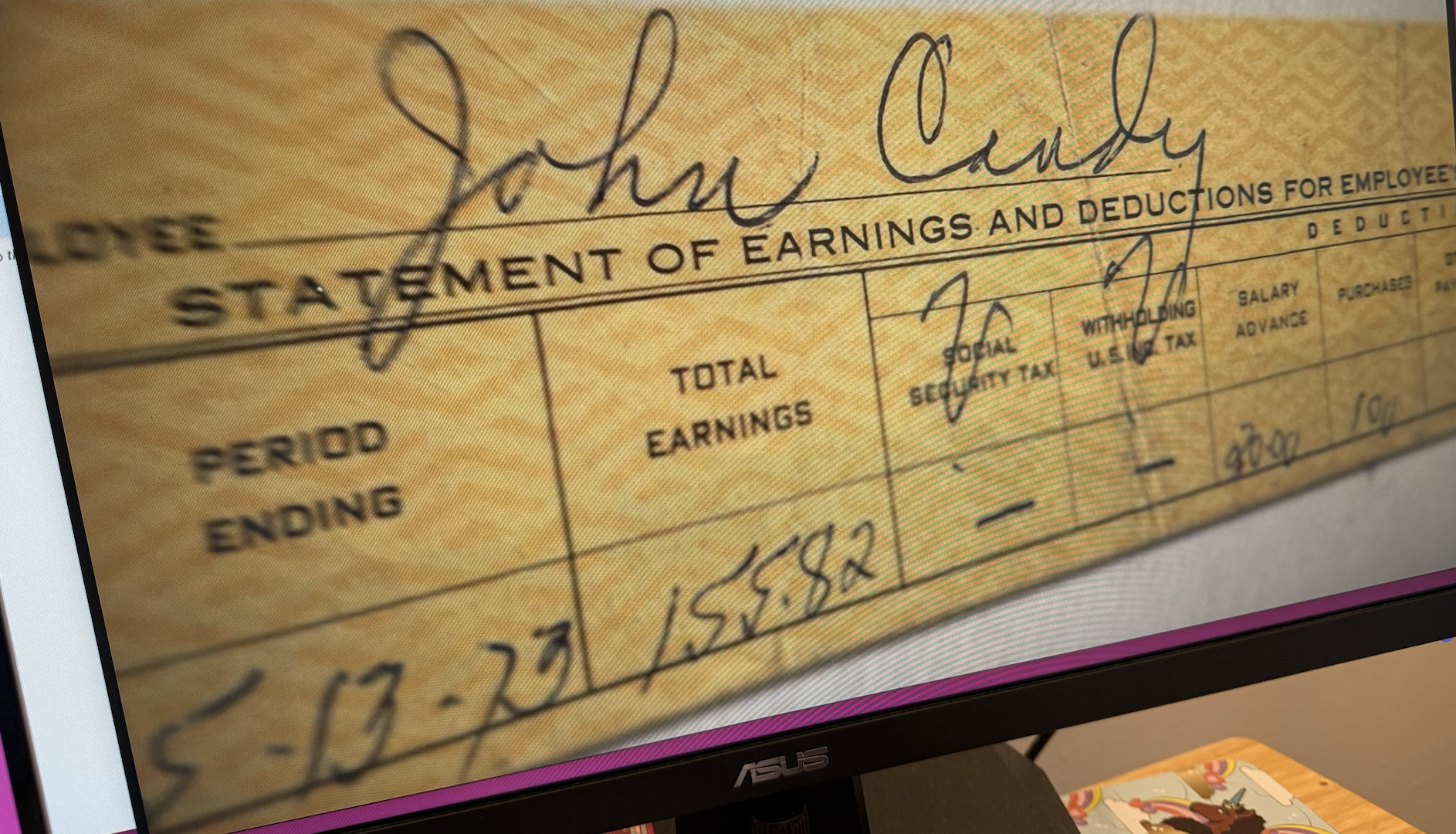
John Candy’s Second City paycheck, as shown in the documentary, “I Like Me.”
Now, there’s nothing wrong with generosity.
When we’re in abundance, it’s a beautiful expression of love, and generosity can also lead to more flow.
But sometimes, generosity becomes a coping mechanism—a way to earn belonging, safety, or approval.
That hit me hard watching John Candy.
When Martin Short said,
“Isn’t it amazing that every time there’s a dinner, John picks up the tab, and he’s making the same money we have.”
… I thought … Yes, he’s wonderfully generous AND that trait of always helping others did not leave much room to take care of himself, and he died of a heart attack at the age of 43.
How many of us do this in our own way?
We overextend. We overgive. We say yes when we’re exhausted.
We carry the emotional tab for everyone else.
Because somewhere deep down, we’ve learned that being “good” means giving more than we have.
But here’s the truth: Overgiving isn’t generosity—it’s self-abandonment in disguise.
When you constantly pour from an empty cup, your body keeps the score. Stress piles up, resentment brews, and your nervous system never feels safe to rest.
John Candy’s story broke my heart, because it reminded me of the cost of that pattern. He lost his father when he was just five years old.
When we lose a parent that young, we may spend our whole lives “people pleasing” and taking care of others because we are fearful that we will lose them (which was what Candy did).
We may also go in the opposite direction and have our walls up so high that we don’t end up having any close relationships with others.
Losing his father at such a young age shaped Candy’s instinct to care for everyone else—to make sure nobody ever felt the pain he once did. But in trying to protect others, he forgot to protect himself.
And that’s the shift I want you to remember:
True generosity includes you.
Putting your oxygen mask on first isn’t selfish—it’s sustainable.
It’s what allows your giving to flow from love, not fear.
If you recognize yourself in that pattern—constantly pouring out, constantly holding space for everyone else—pause and ask:
What would it feel like to be as kind to yourself as you are to others?
Start small.
Ten minutes of quiet.
A glass of water before you jump into caretaking mode.
A stretch, a prayer, a breath.
Because when you take care of yourself first, you’re not giving less to others—you’re giving from overflow.
And that’s when generosity truly becomes abundant.
With Love & Gratitude,
For more ways to create boundaries, start taking care of you, especially as it comes to your financial wellness, sign up for Money Magic Mail below.